Sites we've built
and launched.
Branded, professional websites built with organic SEO HTML and functionality that enables local businesses to convert online traffic into business.
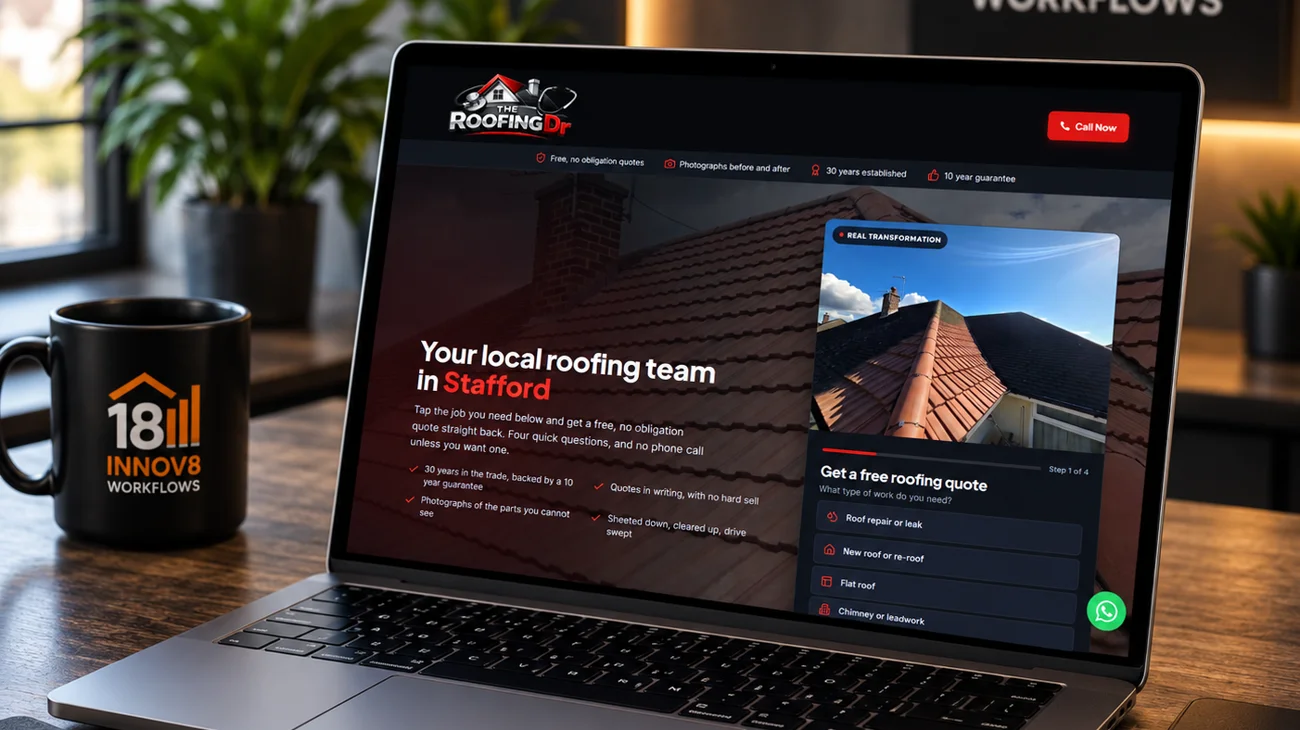
A high conversion ad landing page for Meta ads, built around a four step quiz that turns paid clicks into WhatsApp and phone leads without the friction of a long contact form.
Visit Website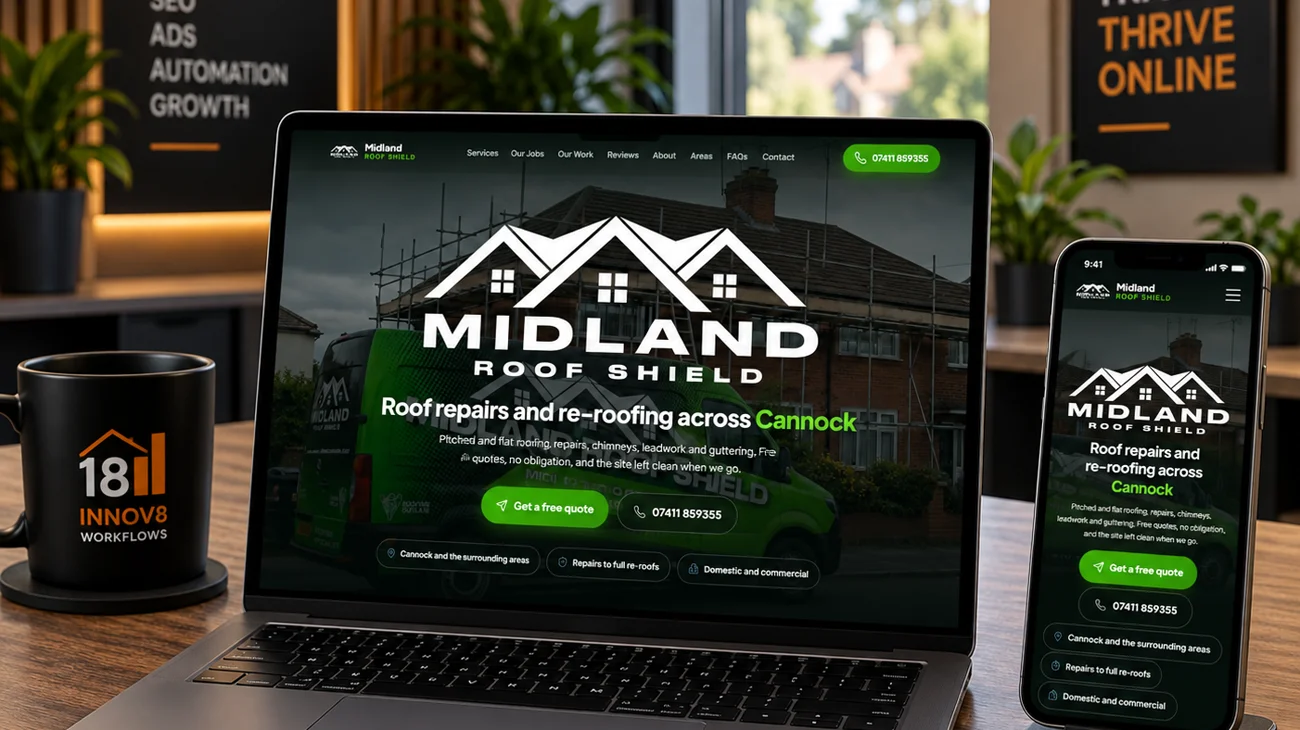
A 39 page SEO website for a Cannock roofing specialist, with dedicated service and area pages covering Hednesford and twenty miles around, built to rank across Staffordshire.
Visit Website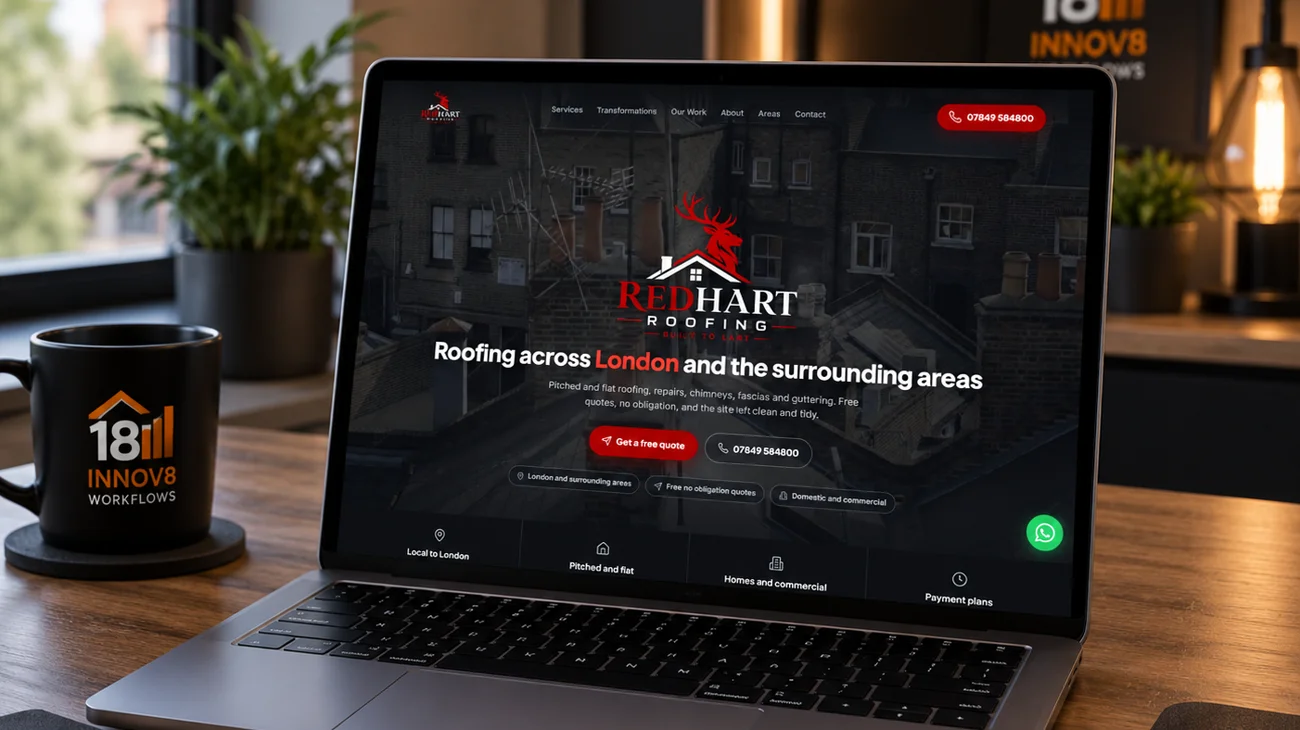
A 34 page SEO website for a West London roofing team, with dedicated pages for re-roofing, flat roofs, leadwork and every area they cover across the west of the capital.
Visit Website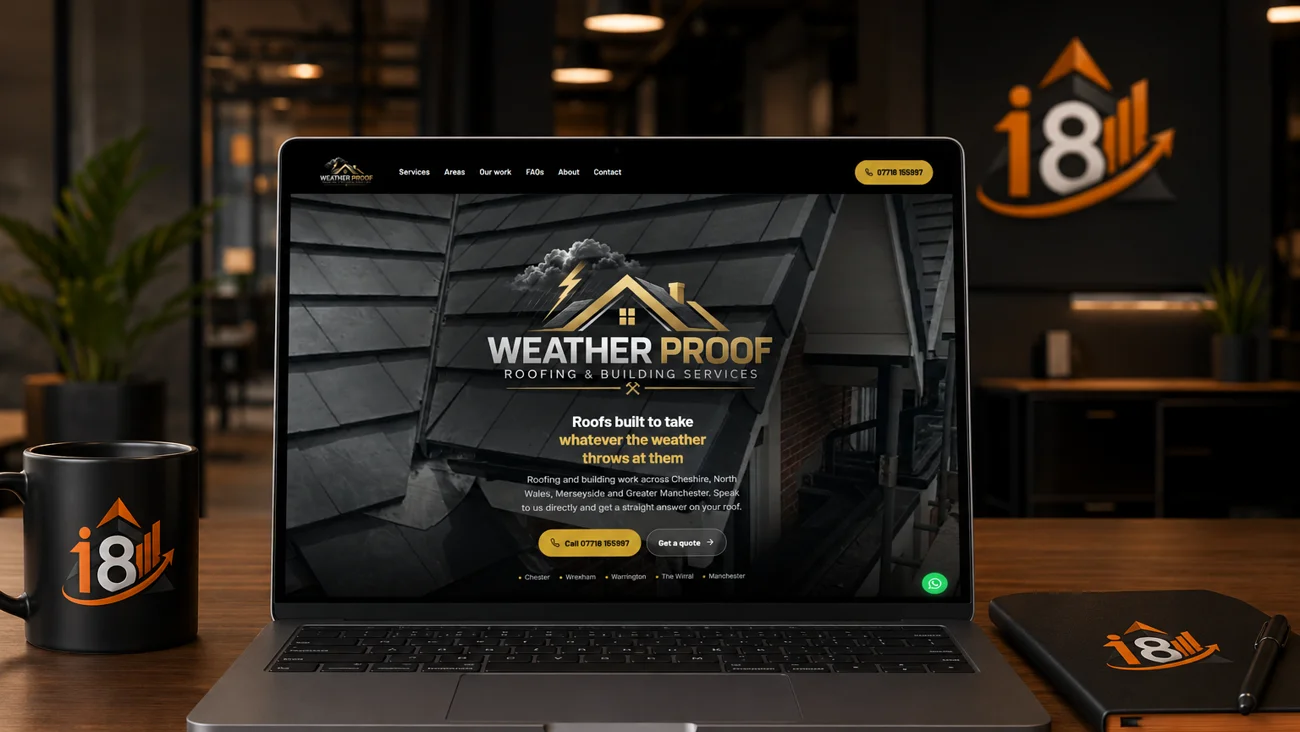
A multi-page SEO site for a roofing and building firm covering Chester, Wrexham, Warrington, the Wirral and Manchester, with dedicated service and area pages built to rank in every town they work.
Visit Website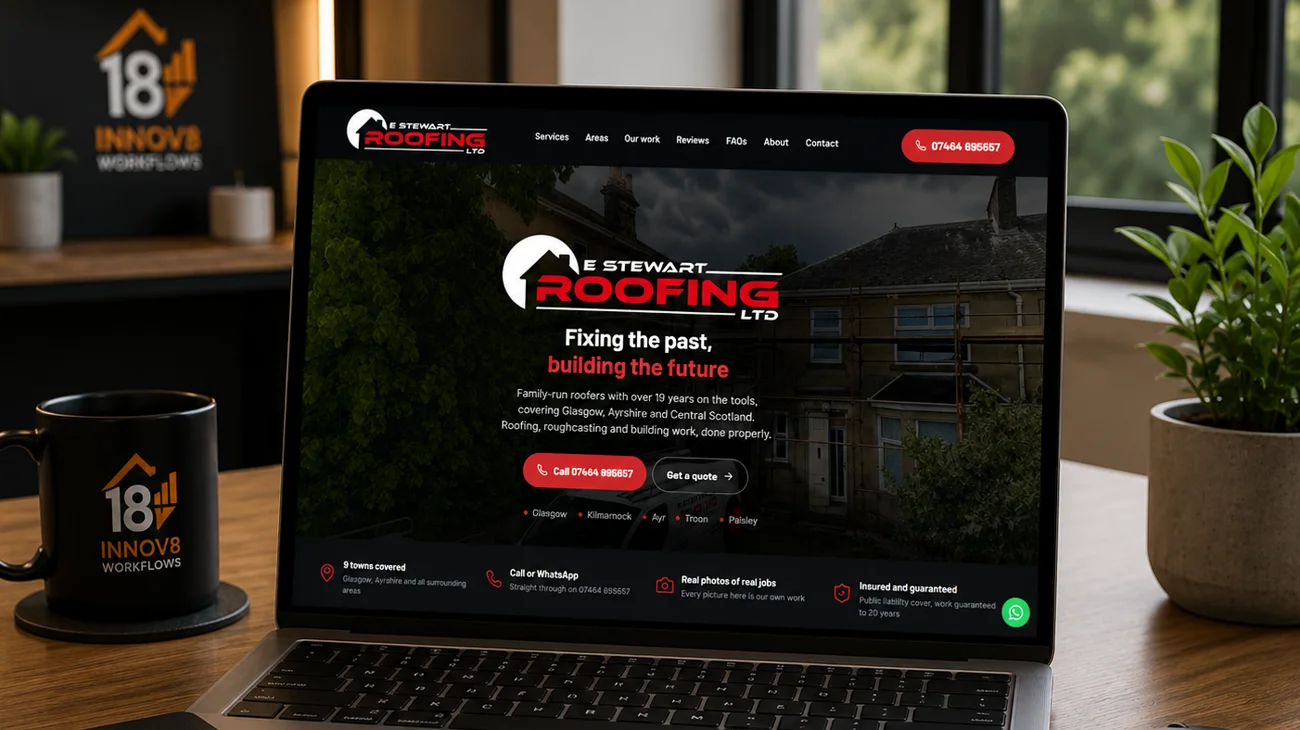
A branded site for a family-run Scottish roofing firm with over 19 years on the tools, covering Glasgow, Ayrshire and Central Scotland with real job photos and WhatsApp enquiries.
Visit Website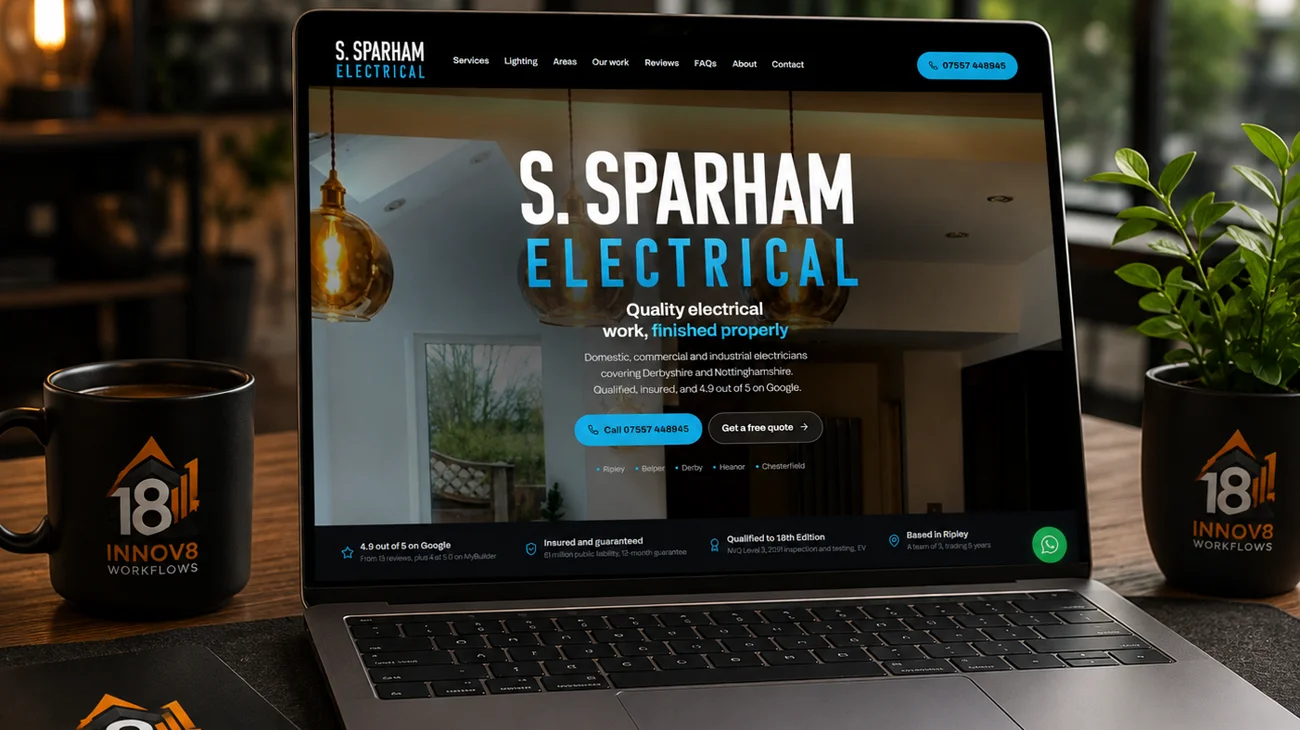
A branded site for a Derbyshire electrical firm covering Ripley, Belper, Derby and Nottinghamshire, showcasing rewires, fuse boards, EICRs and EV charger installs with click-to-call throughout.
Visit Website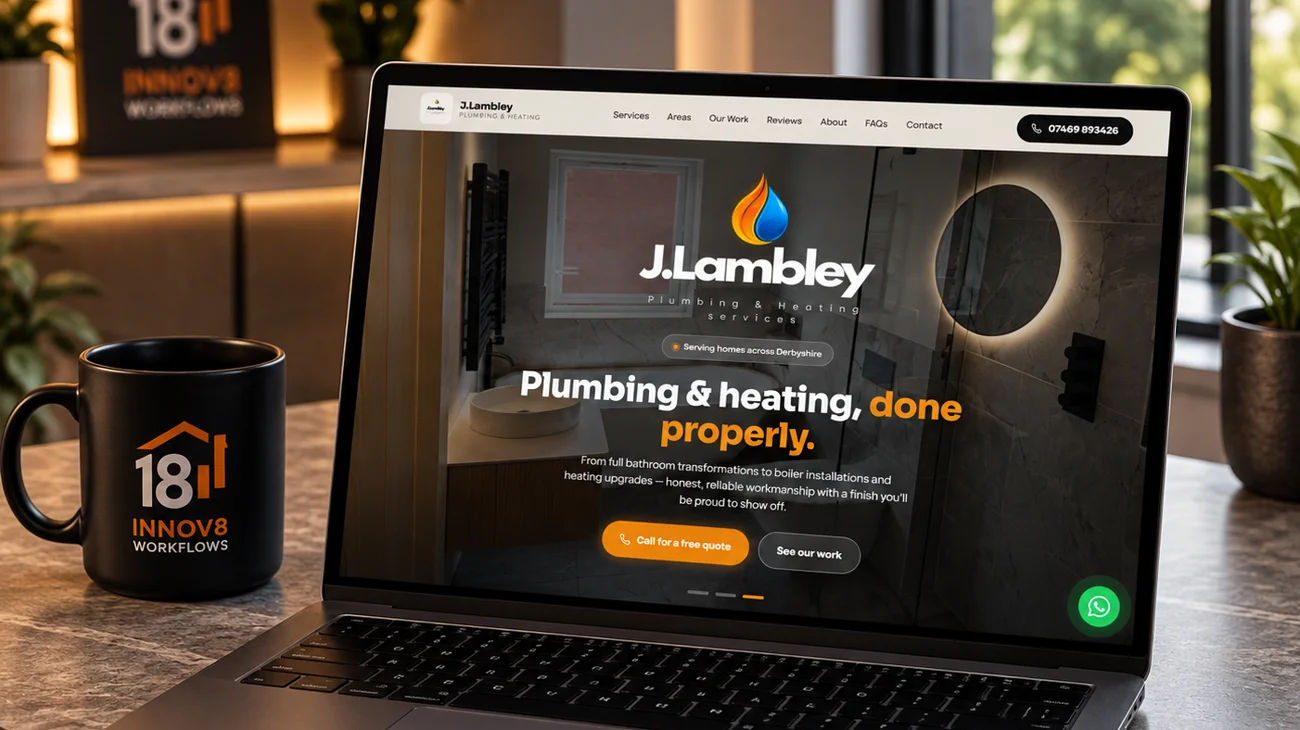
A conversion-focused site for a Derbyshire plumbing and heating business, leading with bathroom installations and free quote flows, with every enquiry logged and emailed automatically.
Visit Website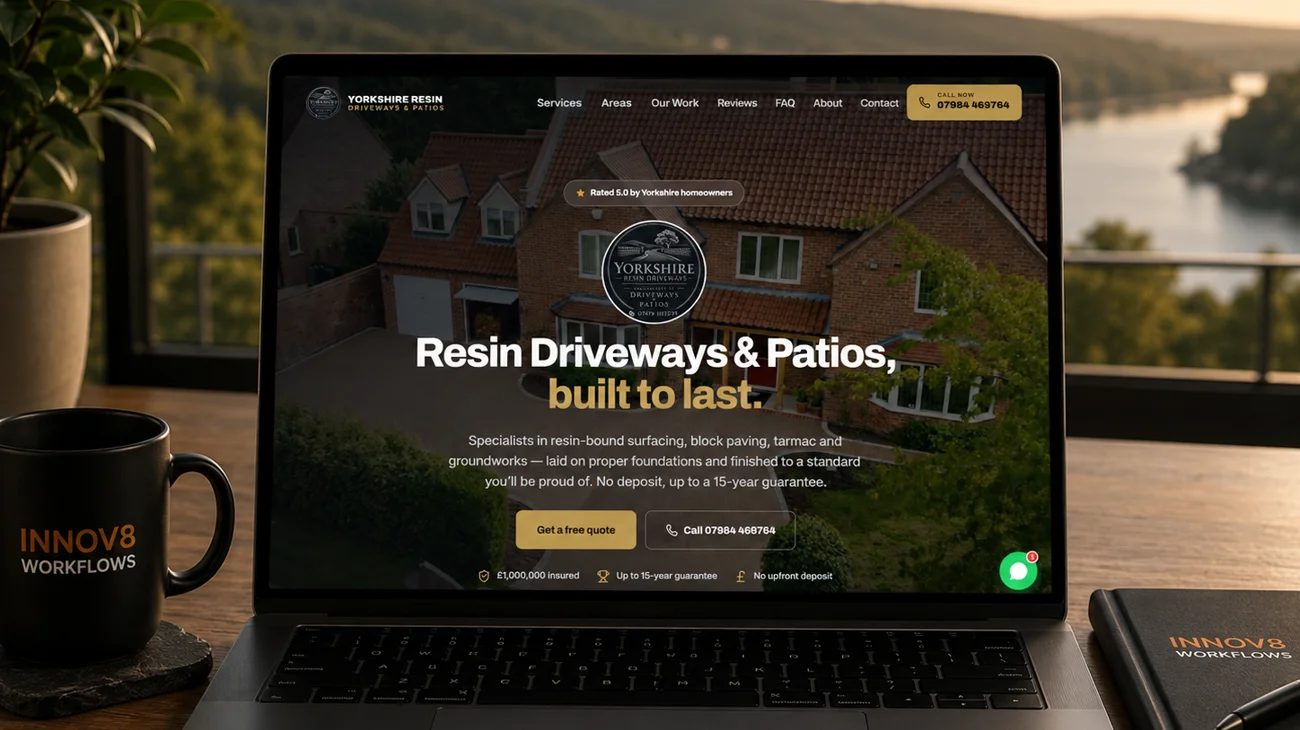
A large, area-targeted SEO website for a resin-bound driveway and patio specialist, with hundreds of location and service pages built to rank right across Yorkshire.
Visit Website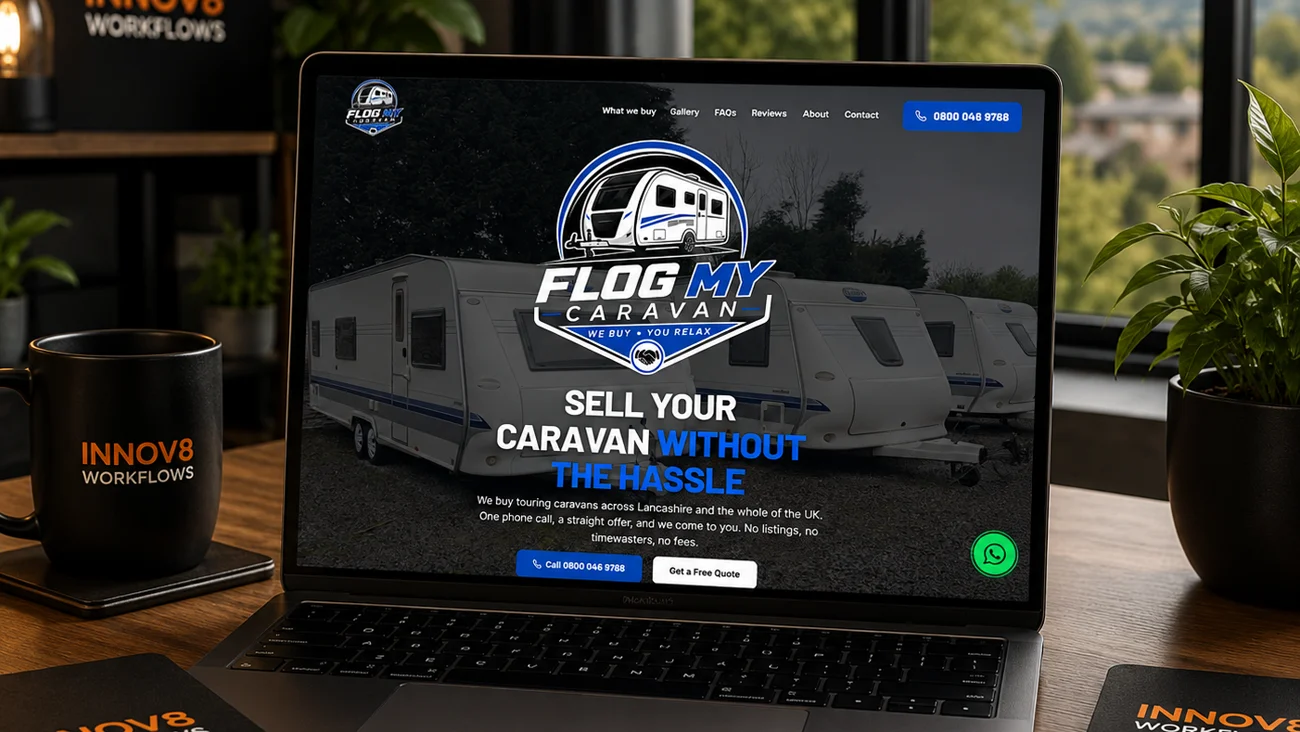
A 13 page site for a UK wide caravan buying service, built around one job: turning visitors into enquiries with a quick quote flow and a WhatsApp first contact path.
Visit Website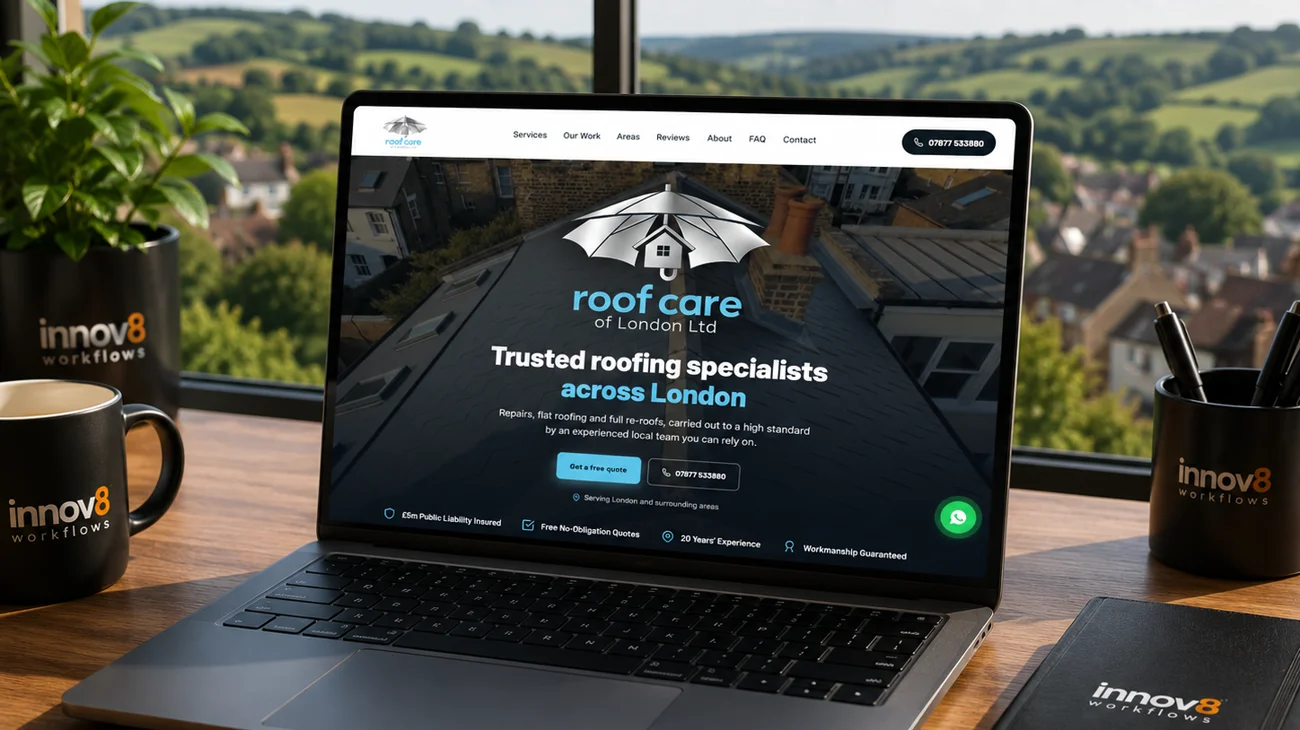
A trust first roofing website for a London specialist, fronted by embedded transformation videos that show real jobs before a visitor reads a single word.
Visit Website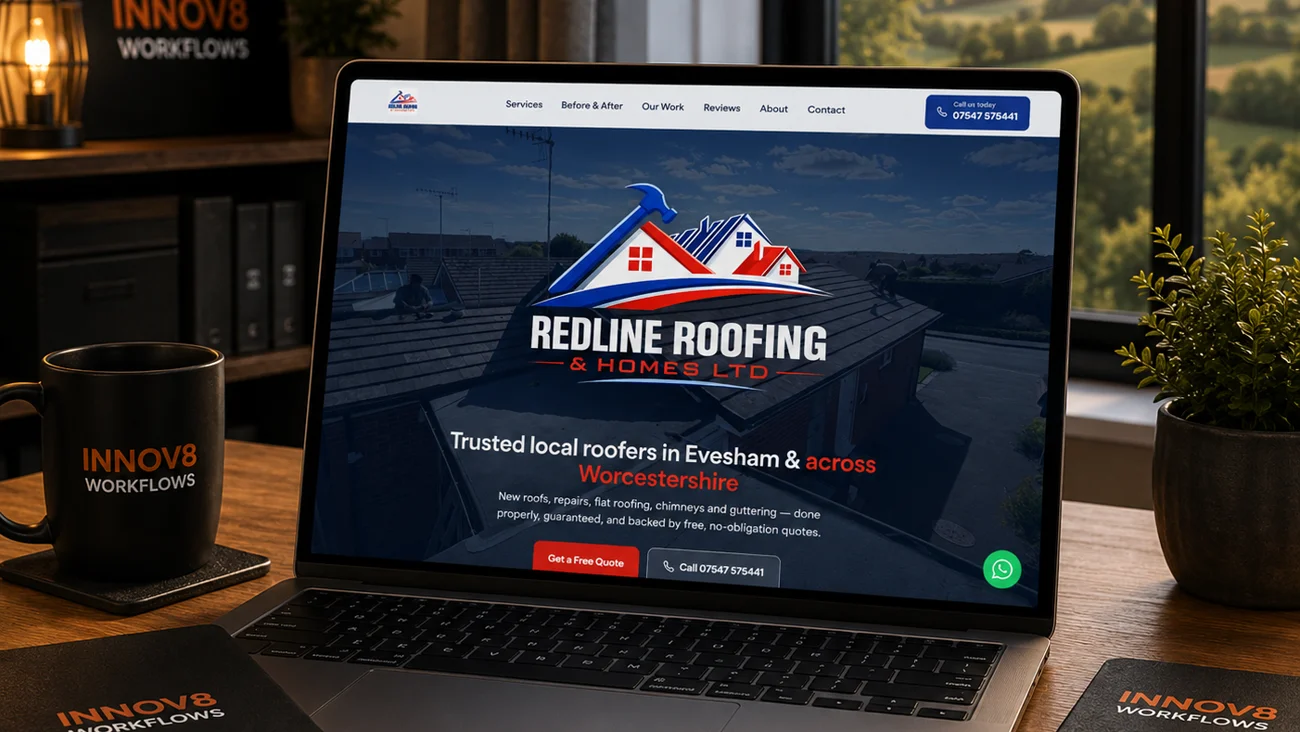
A full replacement for a dated WordPress site: modern SEO pages, a branded review funnel and a clean cutover onto the client's own domain.
Visit Website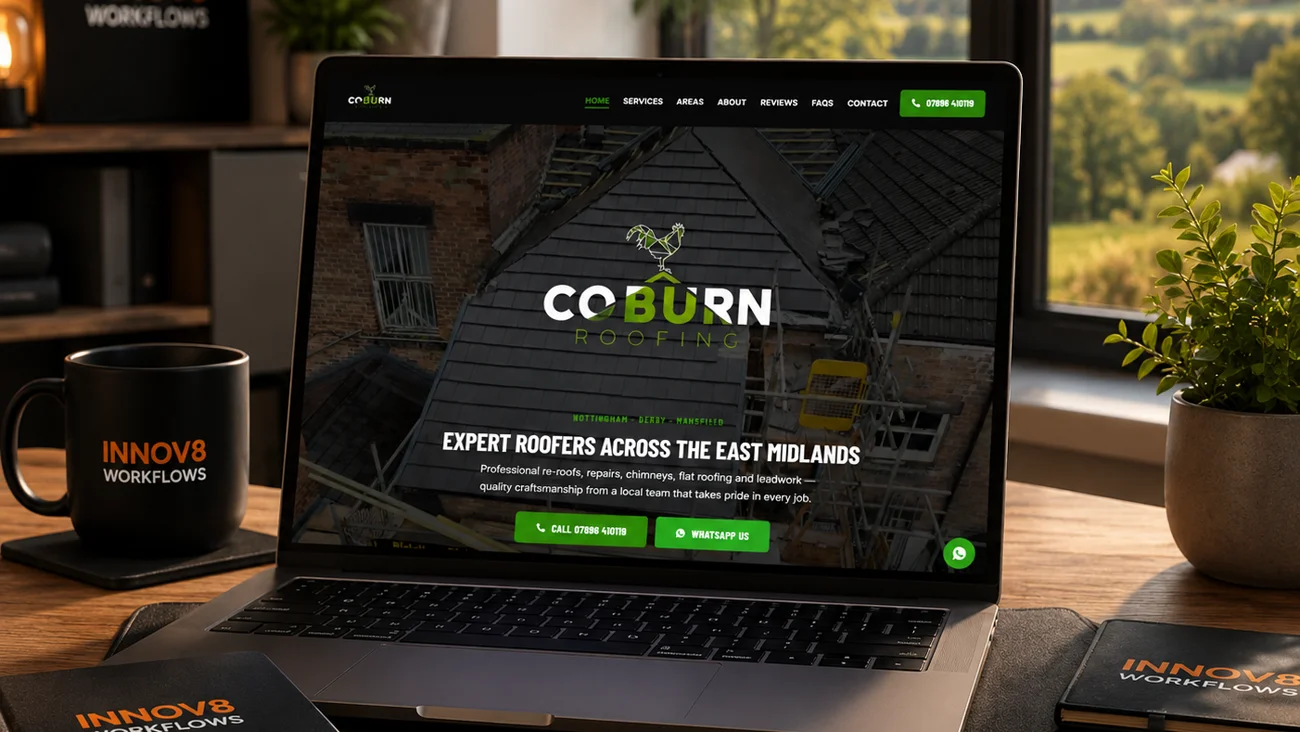
The full growth package for an East Midlands roofer: a main SEO optimised website, Google Business Profile optimisation, a branded review landing page and transformation videos.
Visit Website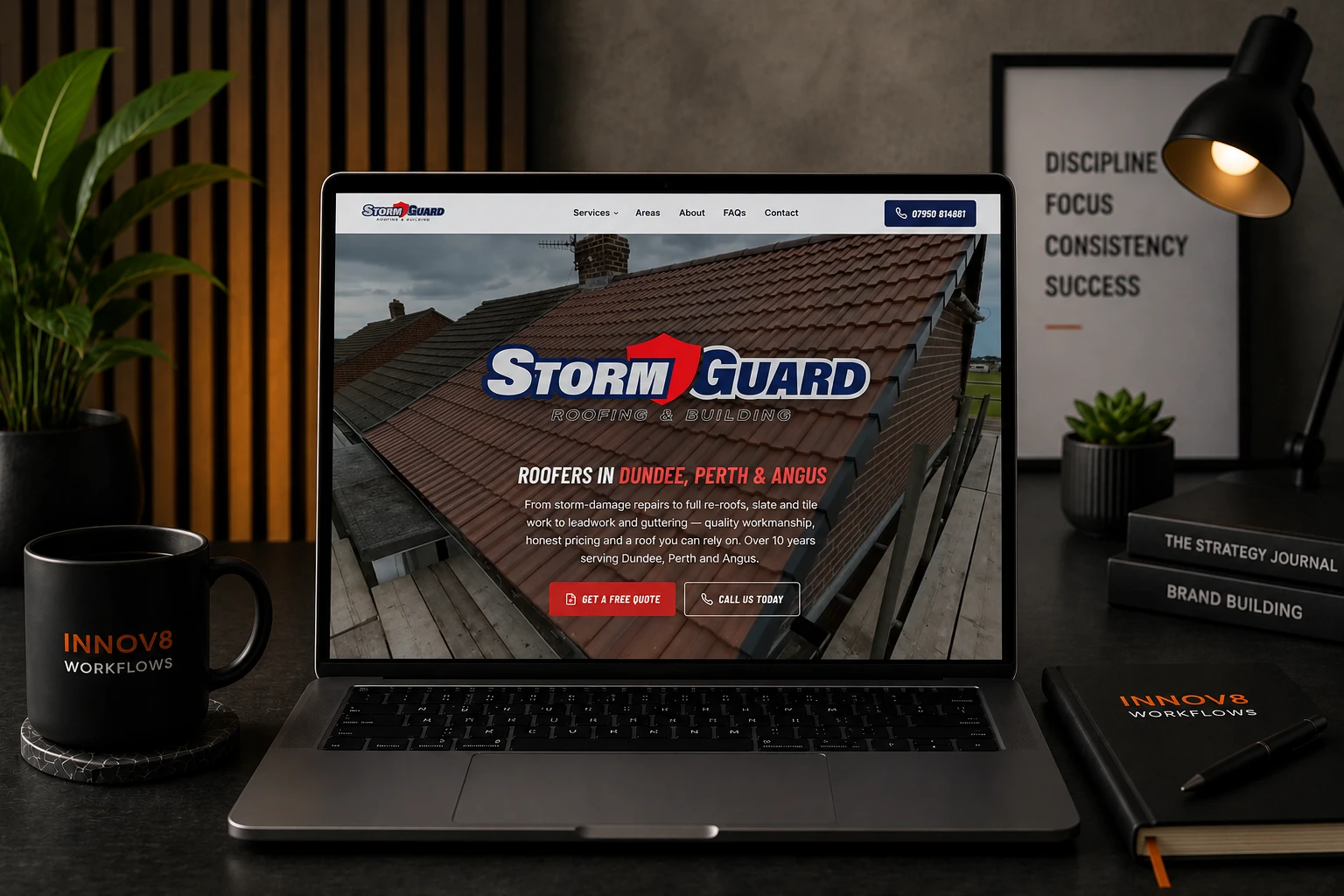
Essential SEO roofing website with a review landing page and embedded before-and-after transformation videos.
Visit Website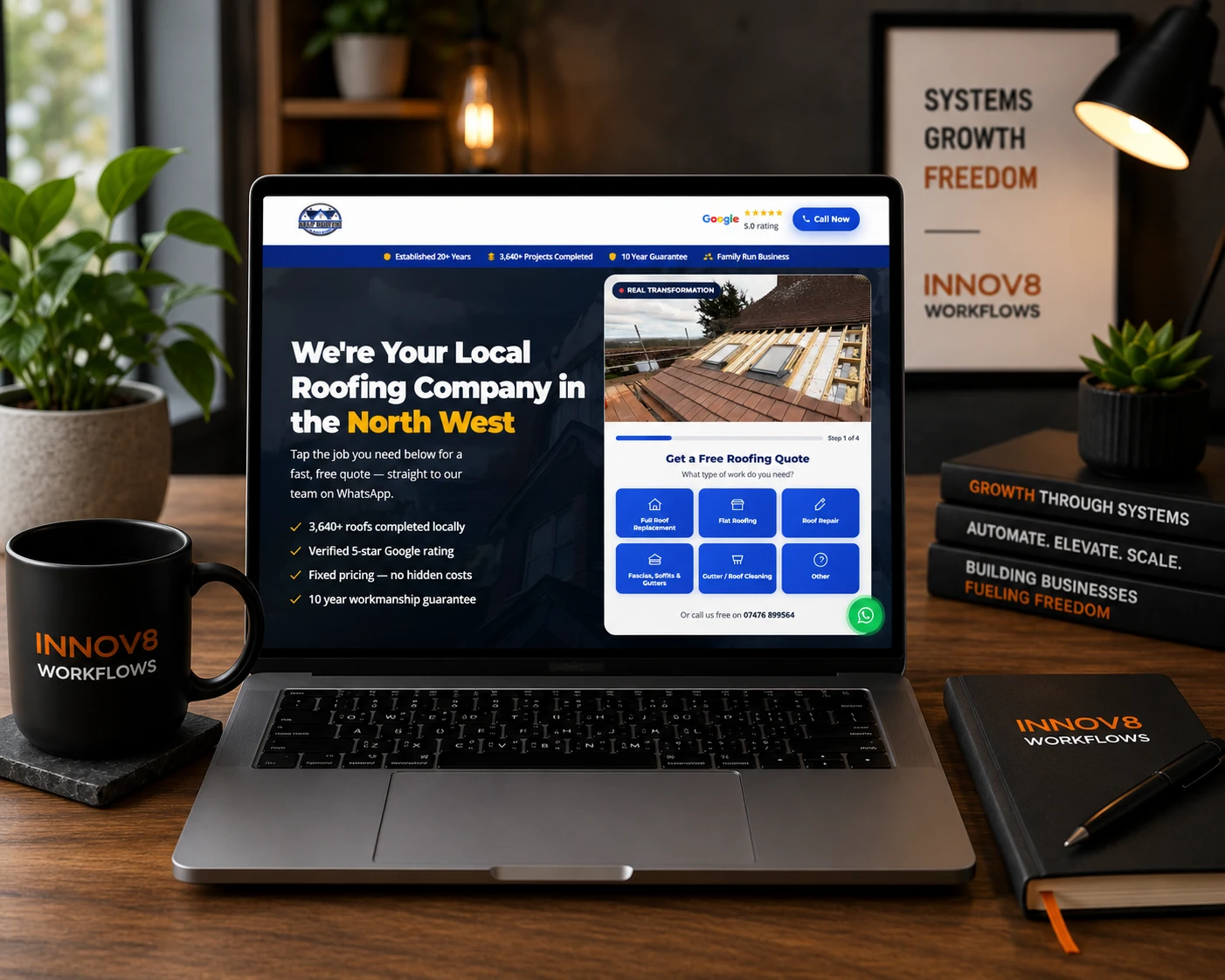
Quote/ad landing page for Meta ad campaigns with an embedded before-and-after transformation video to convert ad clicks into enquiries.
Visit Website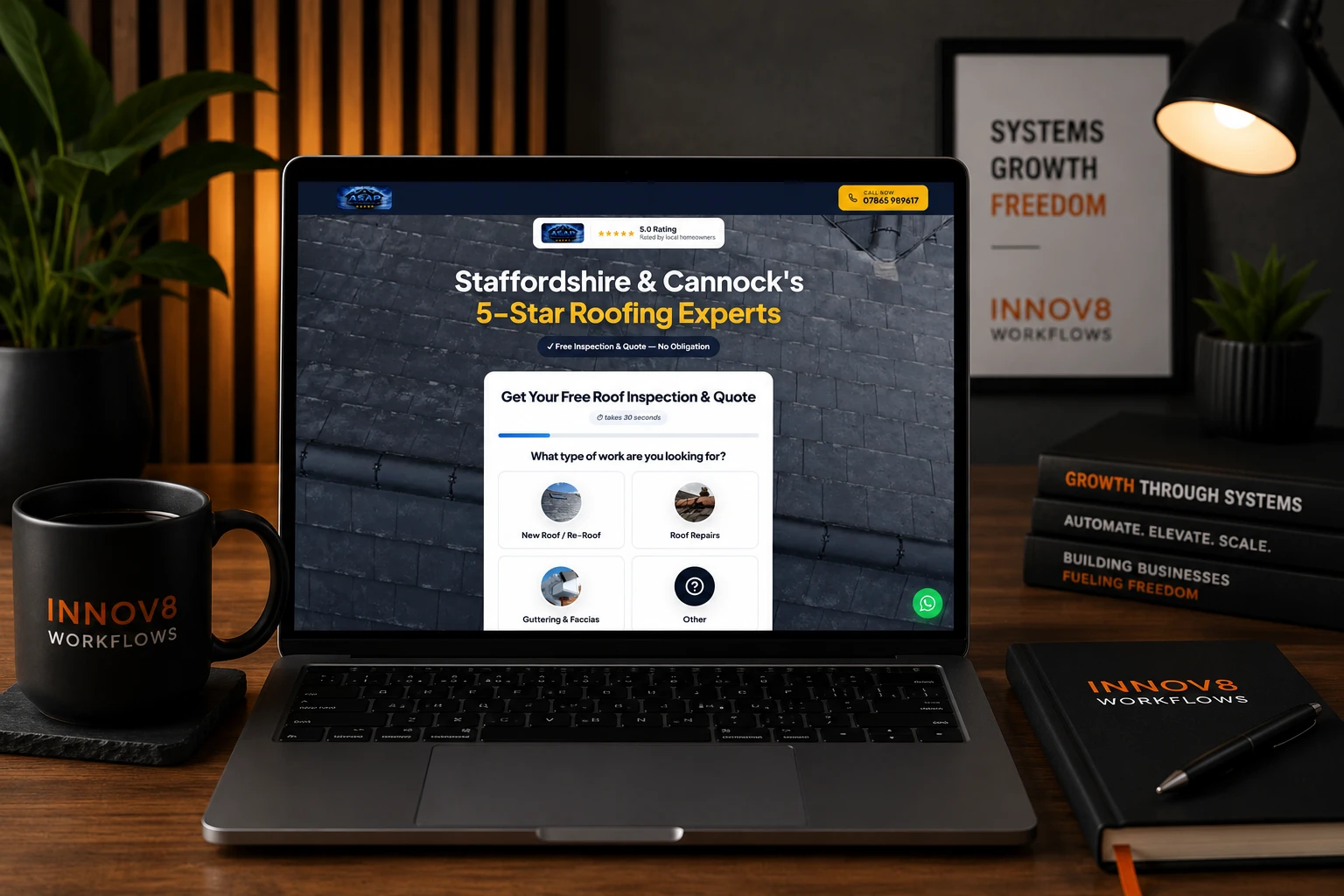
Quote/ad landing page built for Meta ad campaigns — Calendly booking and an embedded transformation video to turn clicks into booked jobs.
Visit Website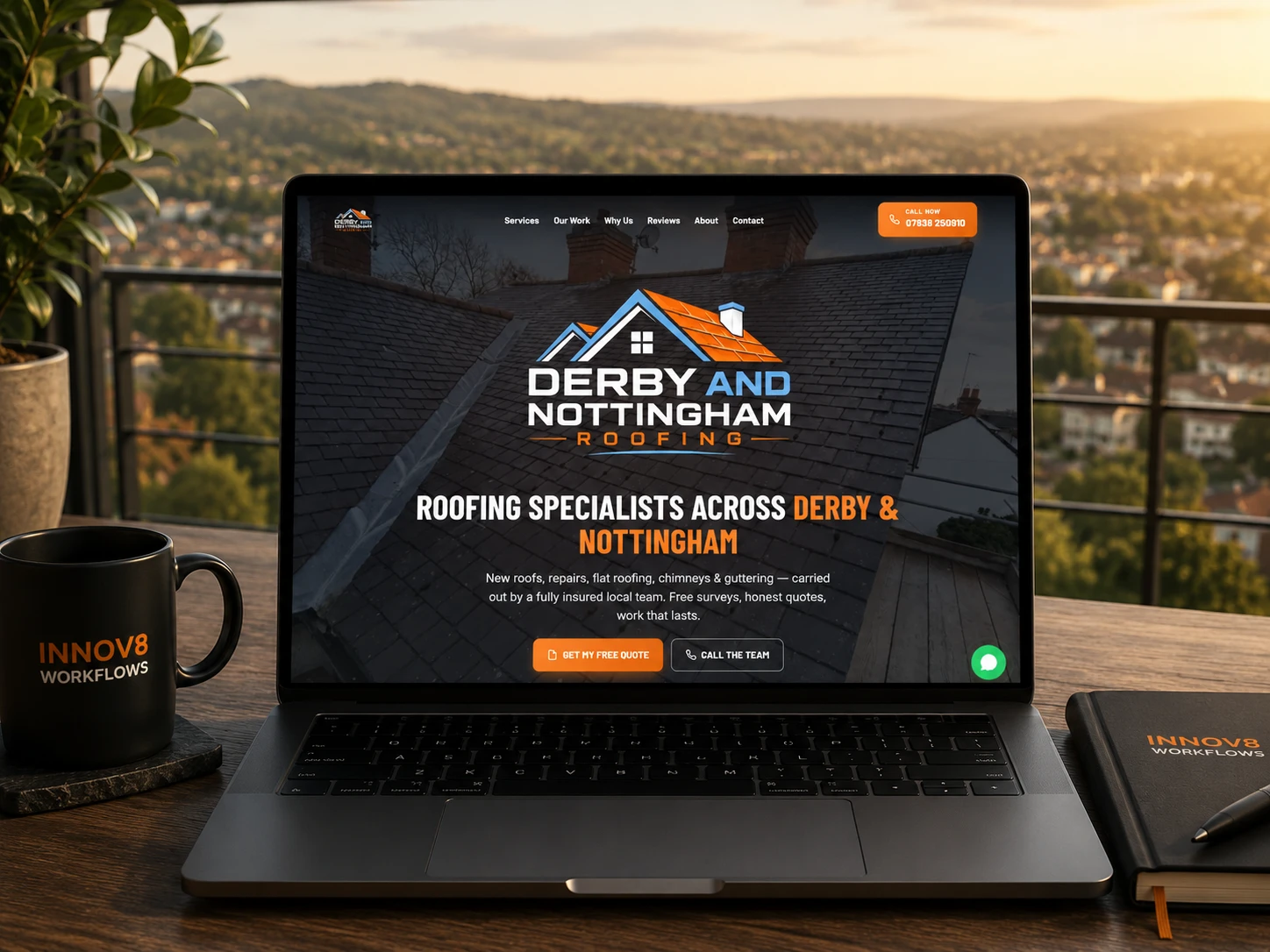
Essential SEO website plus a review landing page, visual transformation package, email hosting and missed-call text-back automation.
Visit Website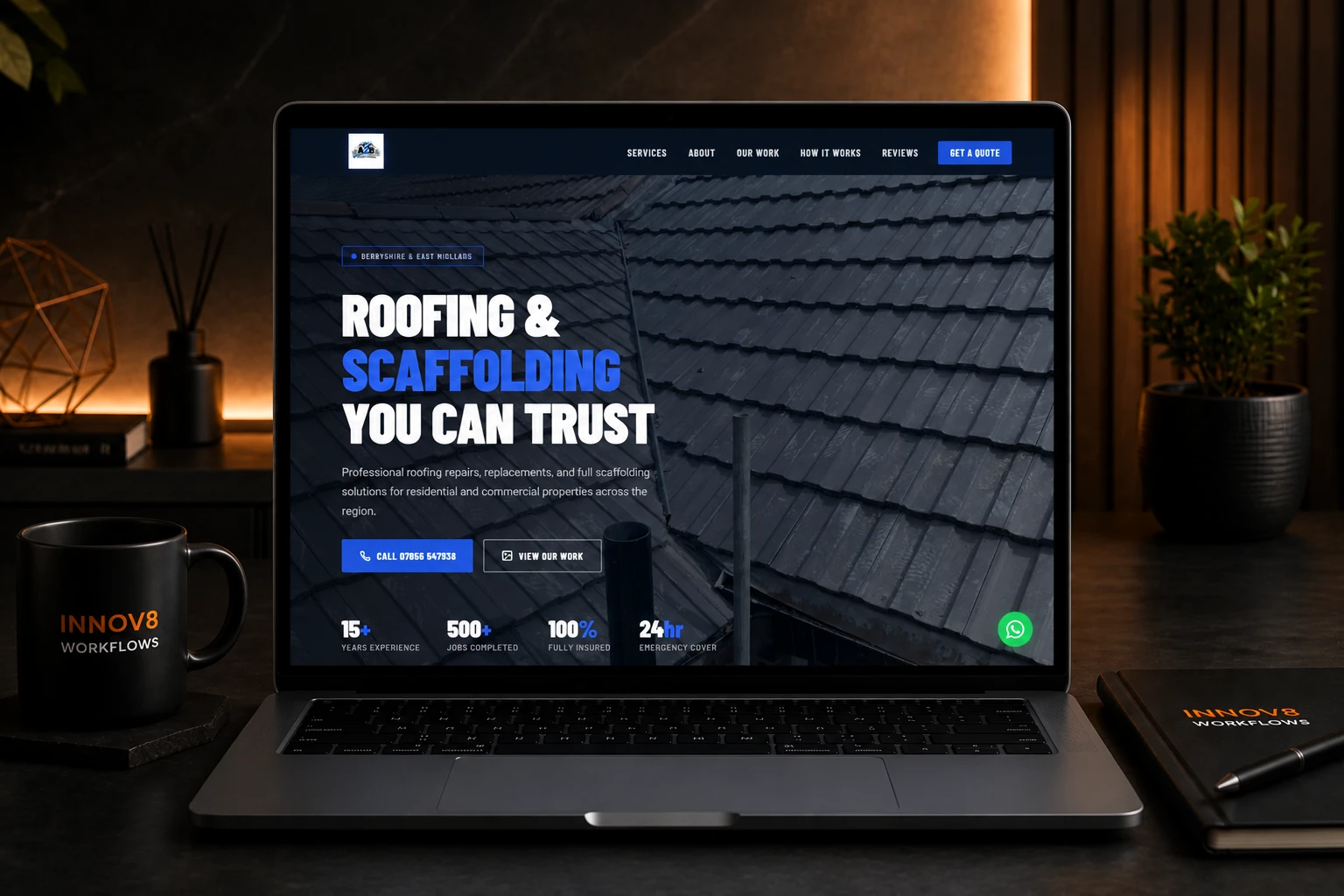
Branded roofing & scaffolding site with trust badges, click-to-call, a reviews section and a 24hr emergency CTA — Facebook page linked in.
Visit Website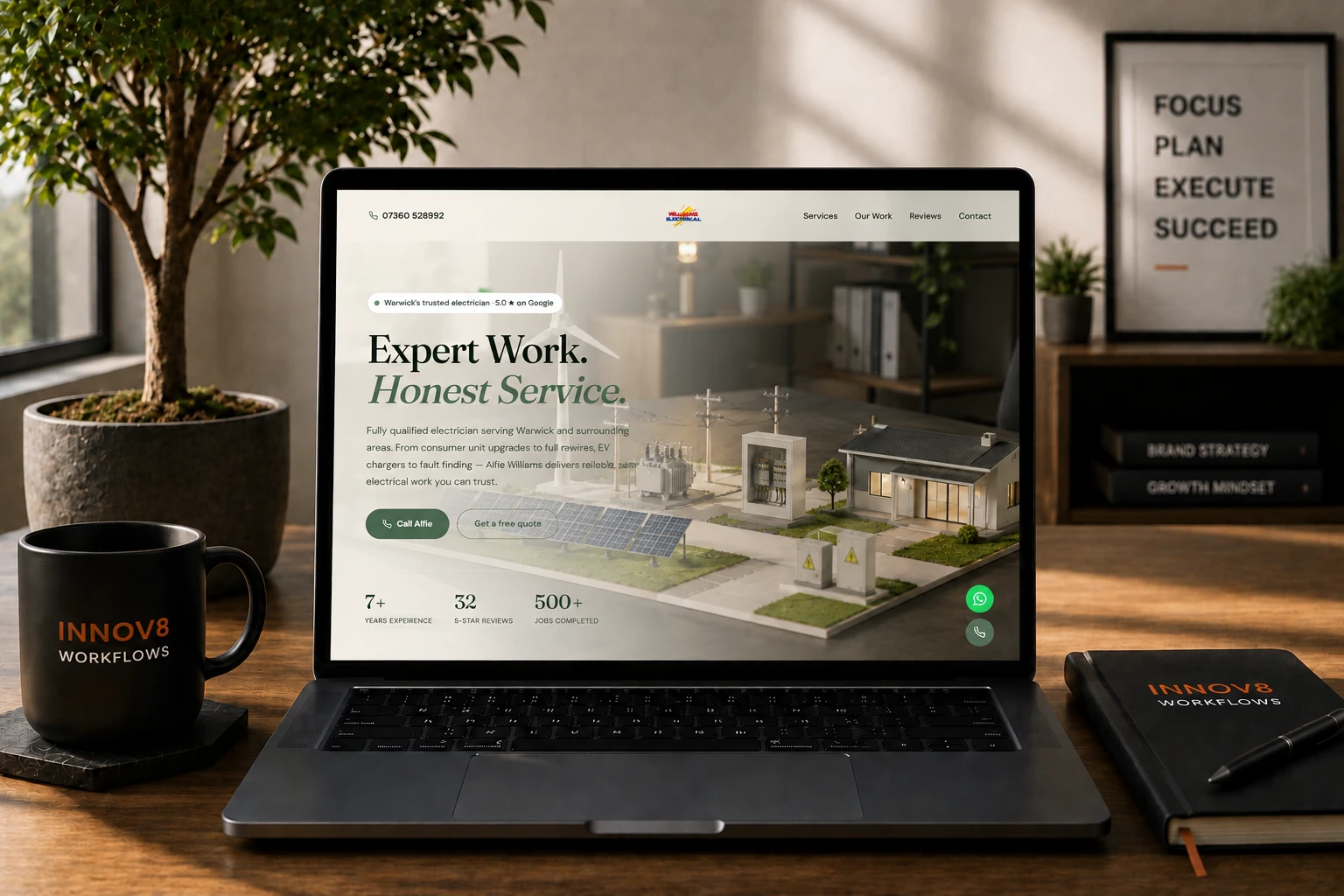
Founder-led electrician site surfacing Google review credentials, with WhatsApp + click-to-call so leads come in 24/7.
Visit Website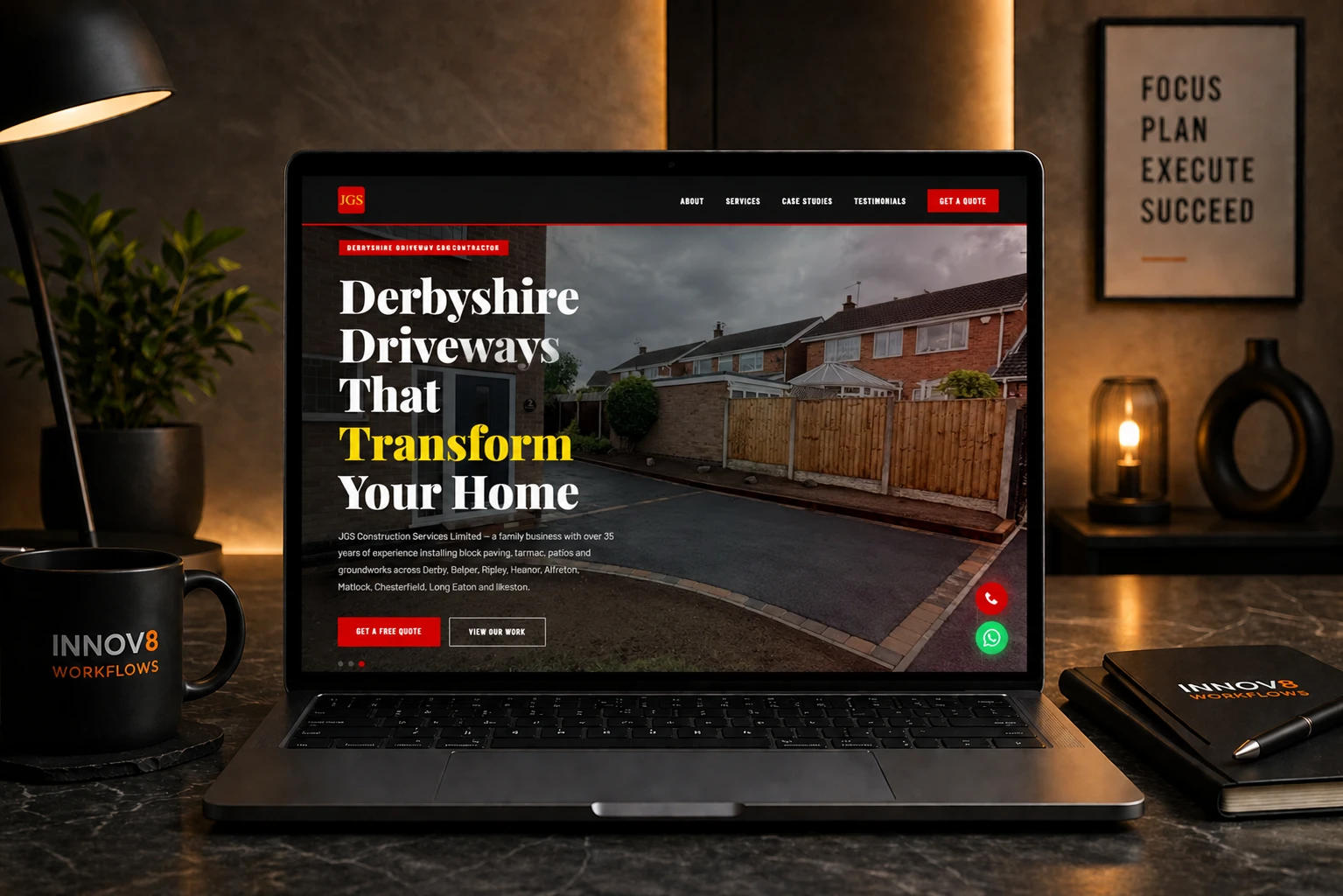
Branded driveways site with optimised local SEO and click-to-call — ranked 2nd on Google in their area, up from 6th.
Visit WebsiteBranded 'Built to Last' builder site with a credentials panel, projects gallery and a WhatsApp widget for instant quotes.
Visit Website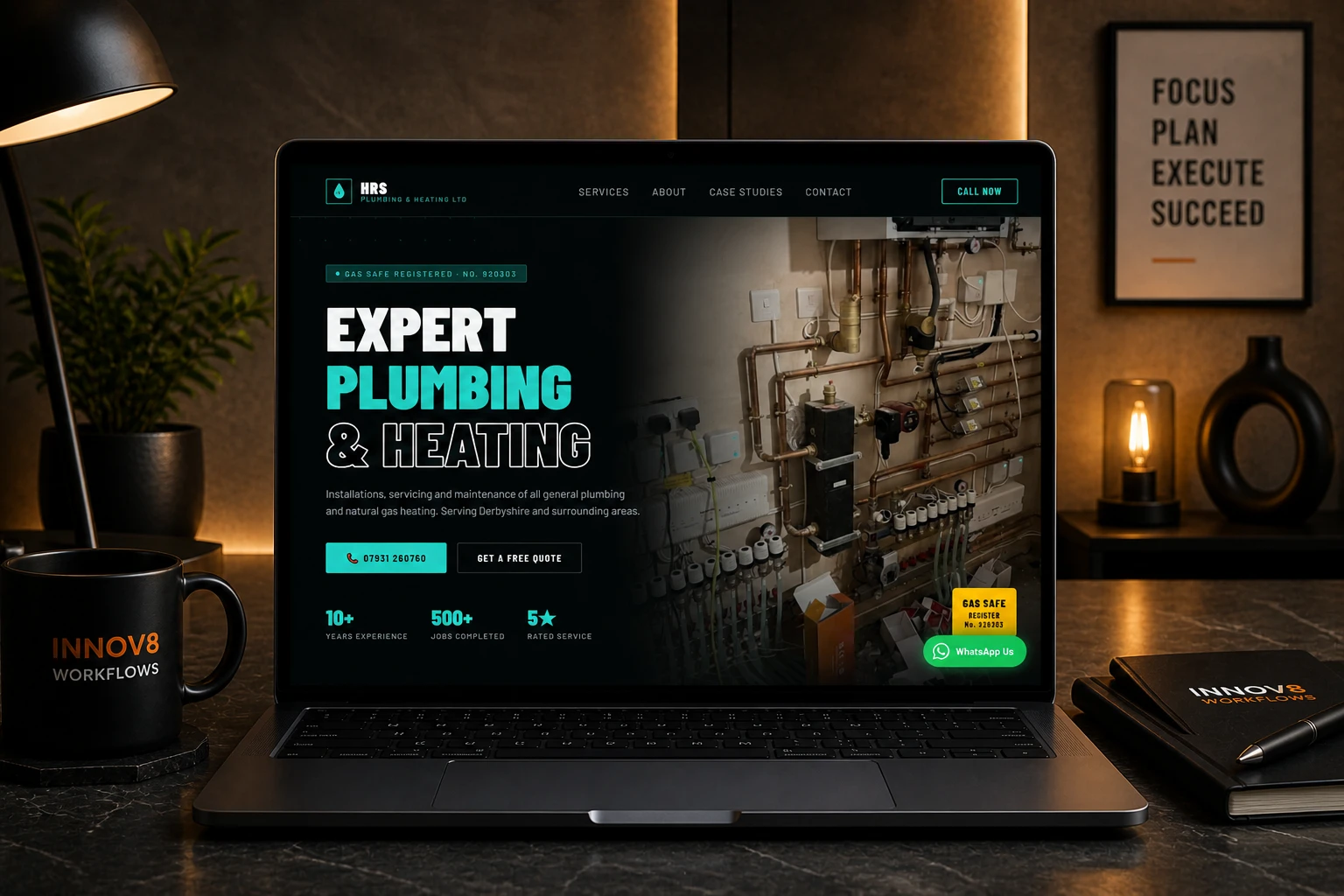
First professional online presence for a Gas Safe plumber — branded site leading with 500+ jobs and 5★ trust signals, mobile-optimised.
Launching Soon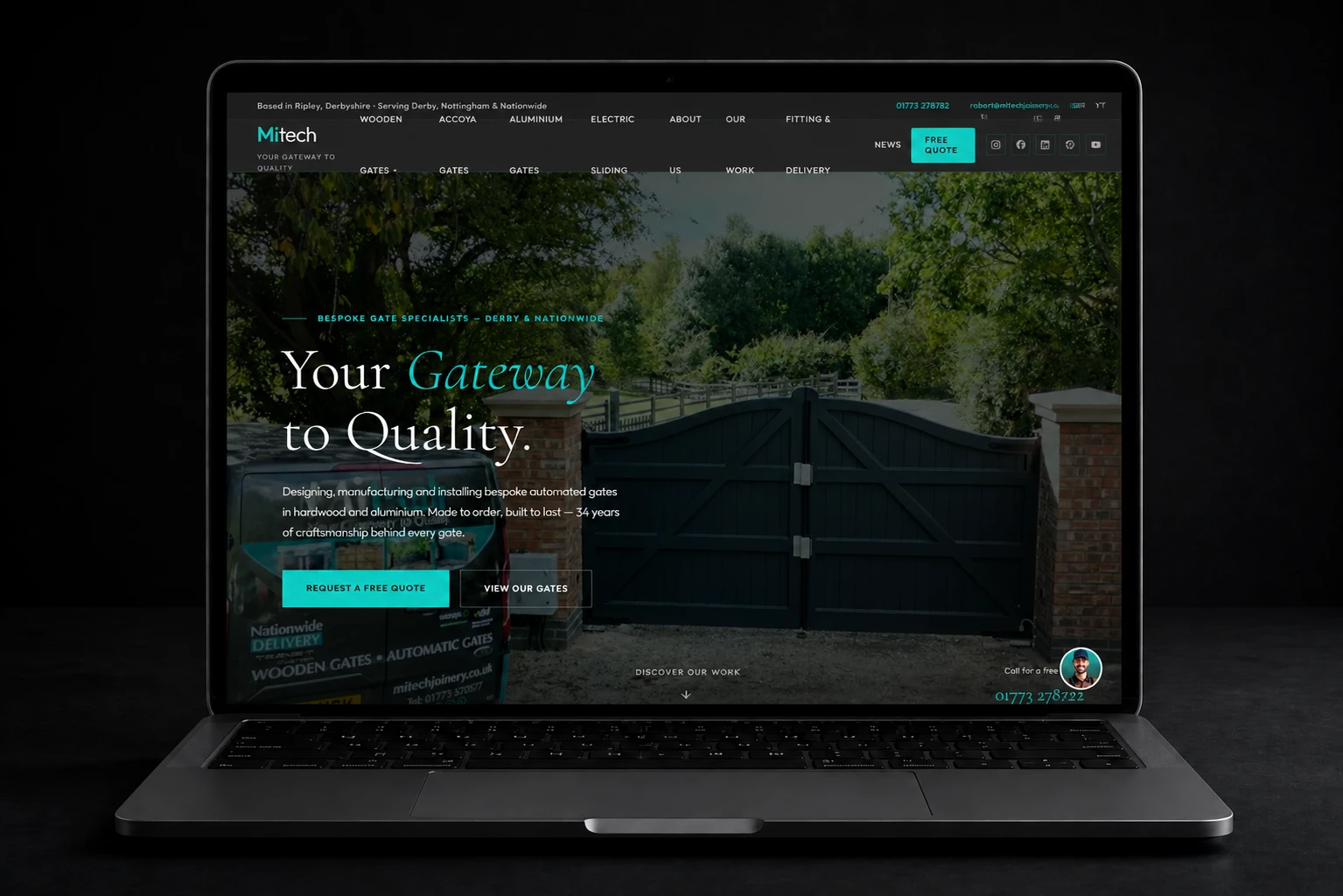
Multi-page joinery site with dedicated product pages per gate type, a 'View Our Gates' gallery and free-quote flows.
Launching Soon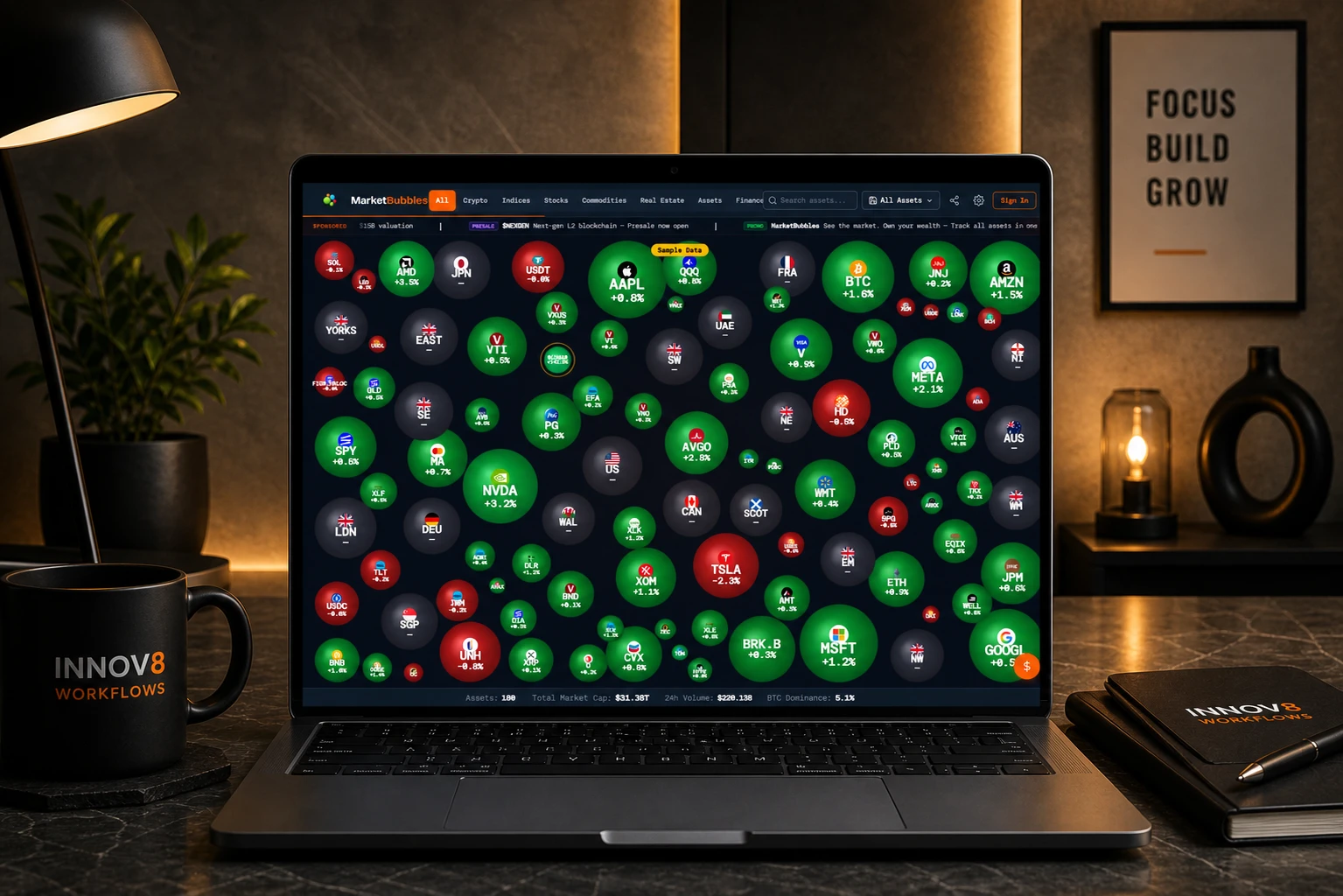
First-of-its-kind investment visualiser tracking every asset class — custom frontend + backend, bubble/grid/block views and a companion mobile app.
Visit Website